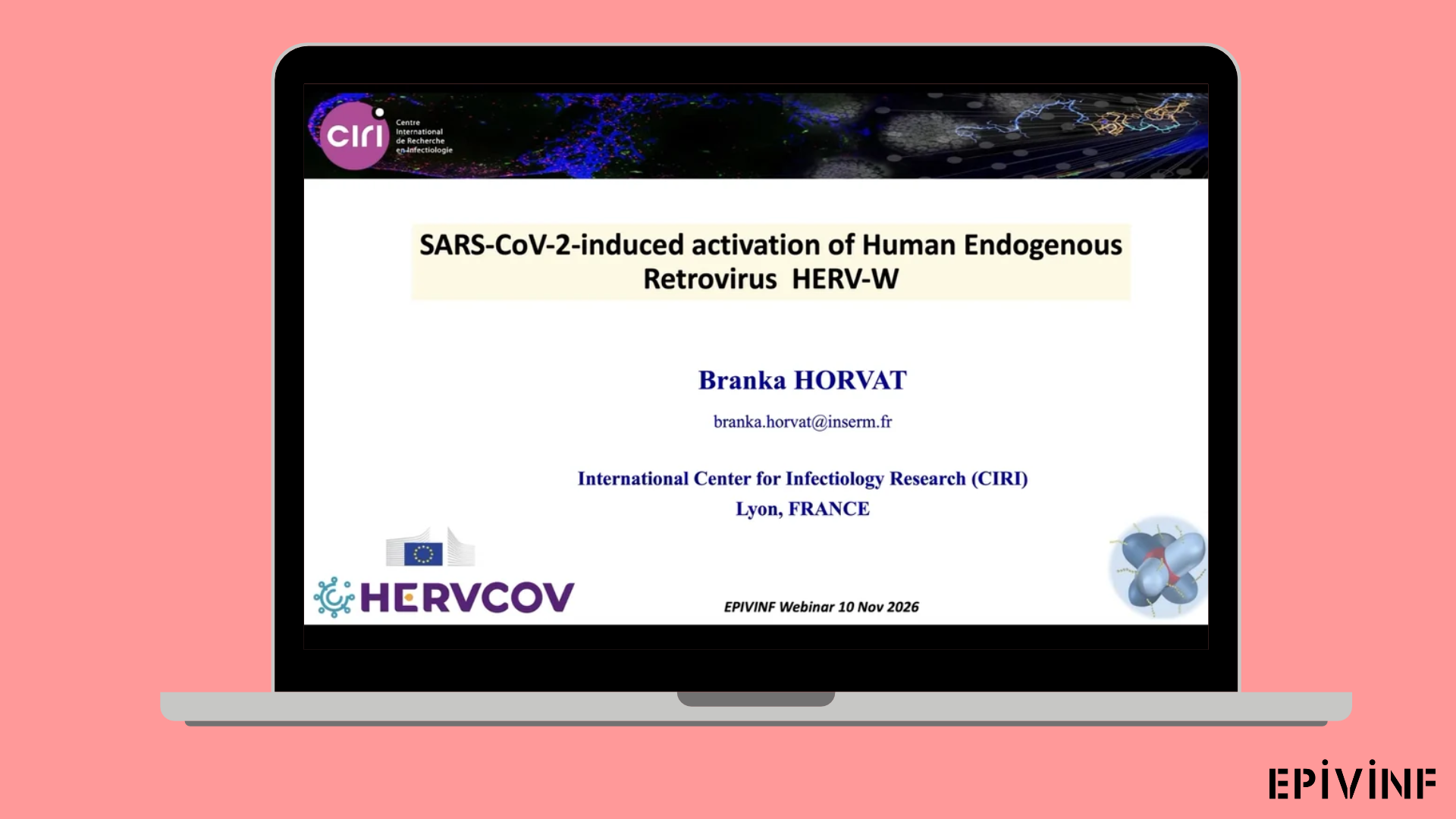
A recent EPIVINF webinar presented by Branka Horvat explored how SARS-CoV-2 infection may activate ancient viral sequences embedded in the human genome, potentially contributing to Long COVID and offering new opportunities for diagnosis and treatment. The presentation focused on human endogenous retrovirus W (HERV-W), a remnant of ancient viral infections that became integrated into human DNA millions of years ago. Although most of these sequences remain inactive, certain triggers, including viral infections, can reactivate them.
Evidence of HERV-W activation in COVID-19
Horvat presented research showing that exposure to SARS-CoV-2 can induce HERV-W gene and protein expression in immune cells from healthy donors. Researchers also detected increased levels of HERV-W envelope protein in the blood of COVID-19 patients, with higher concentrations appearing to correlate with disease severity. The protein was also identified in several tissues, including the lungs, nasal mucosa, heart and brain, suggesting that HERV-W activation may extend beyond the initial sites of infection.
Investigating a potential link to Long COVID
Through the HERVCOV EU funded project, researchers are investigating whether HERV-W contributes to Long COVID and could serve as a biomarker for the condition. Preliminary results show elevated HERV-W protein levels in approximately 30–40% of the Long COVID patients studied. Researchers are now conducting further analyses to understand whether this activation is associated with symptoms or disease mechanisms. One particularly interesting finding concerns the potential relationship between HERV-W activation, cellular senescence, and mitochondrial dysfunction. Experiments suggest that HERV-W expression may impair mitochondrial function and promote cellular changes associated with ageing. Since mitochondrial dysfunction has also been reported in Long COVID patients, these findings could help explain some of the biological mechanisms underlying persistent symptoms.
Potential diagnostic and therapeutic applications
Although further research is needed to establish causality, the findings suggest that HERV-W could become a useful biomarker for identifying certain patients with severe COVID-19 or Long COVID. Targeting HERV-W-related pathways may also open new possibilities for more personalised treatment strategies. During the discussion, participants raised questions about the mechanisms responsible for HERV-W activation. Horvat explained that her team is investigating the role of epigenetic changes, inflammatory signals and other viral infections, including human herpesvirus 6 (HHV-6) and Epstein-Barr virus (EBV).