
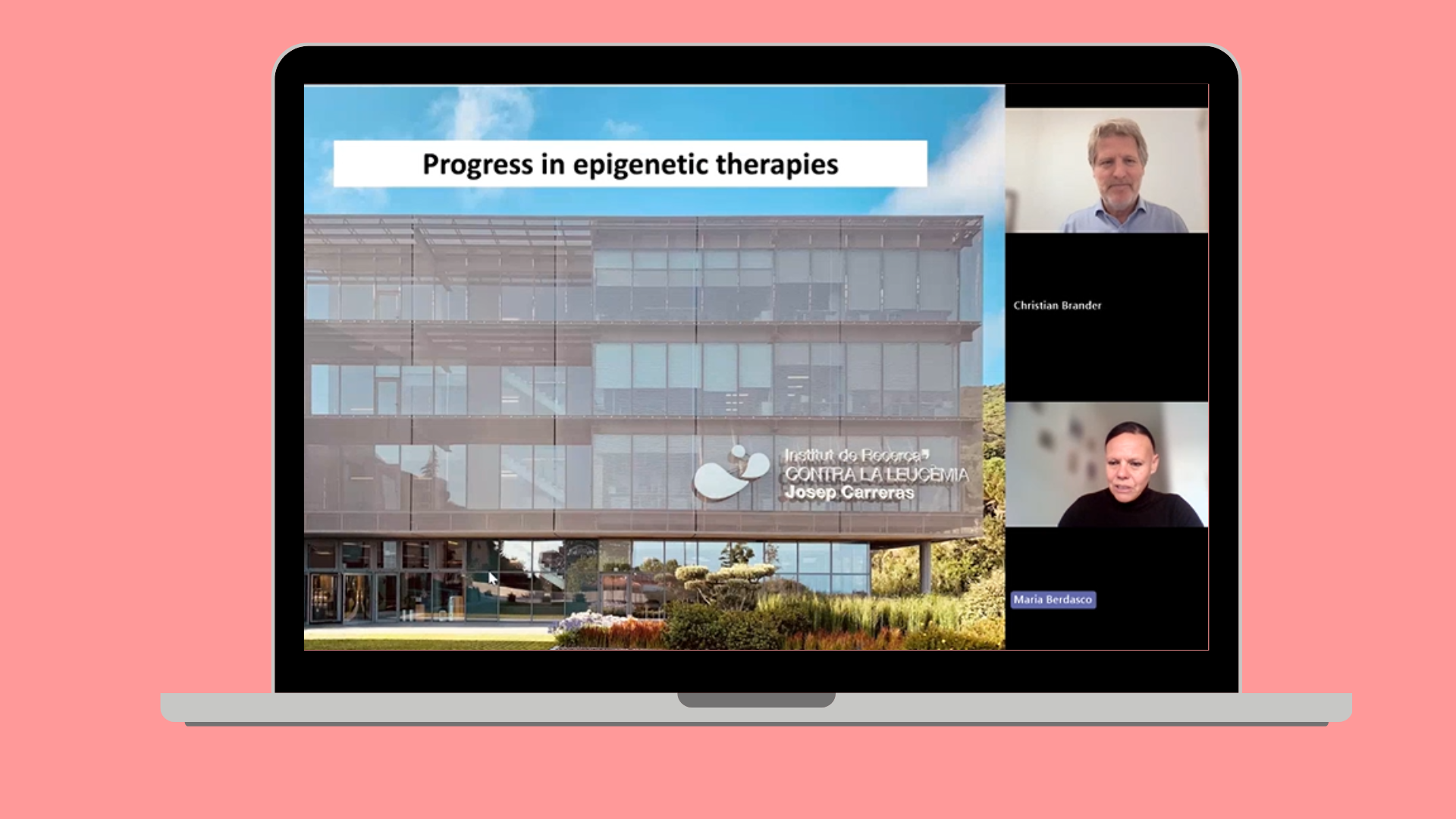
In the recent webinar, Dr. Maria Berdasco from the Josep Carreras Institute talked about new developments in epigenetic therapies. She focused mainly on cancer research but also discussed what these advances could mean for HIV. She explained that epigenetics looks at how factors like environment and lifestyle affect how genes are turned on or off. This is important for diseases like HIV, where many epigenetic changes are linked to how severe the disease becomes, how the immune system works, how fast people age, and overall survival. A major challenge is turning the huge amount of epigenetic data into treatments that actually help patients.
Dr. Berdasco explained that epigenetic information can be used to help diagnose disease, predict outcomes, or identify new treatment targets. One big advantage is that epigenetic changes can be reversed. She described three stages of epigenetic drugs, starting with early drugs that affected many targets and moving toward newer drugs that are more precise. Most of these drugs are currently approved for treating cancer.
In HIV research, epigenetic treatments have mainly been studied using two approaches. The first, called “kick and kill,” tries to wake up hidden virus so infected cells can be destroyed. The second, newer approach, called “lock and block,” aims to keep the virus permanently switched off. She also talked about epigenetic clocks, which suggest that people with HIV may age faster biologically, although these tools are not yet used in clinical practice.
The webinar also discussed the limits of epigenetic therapies. These include drugs affecting too many genes, the virus developing resistance, unwanted side effects, and difficulties delivering treatments to the right cells. Possible ways to address these problems include combining drugs, designing medicines that hit more than one target, and using biomarkers to better guide treatment choices. Dr. Berdasco also introduced epitranscriptomics, a newer field that studies changes to RNA, which may also play a role in HIV and could lead to future treatments.
Overall, the webinar made it clear that while epigenetic therapies are already widely used in cancer, their use in HIV is still at an early stage. There are many challenges ahead, but also promising opportunities to develop more targeted and long-lasting treatments.